Cleaning up my hard drive, I found these musical experiments I'd made in the past. I may have posted them when I originally made them, but the links would be long-broken. This may be of interest if you want to hear the very good piano sound on the Yamaha S-90ES.
Piano (mostly Natural S from Yamaha S90ES)
S90-Sat
s90-idea1
s90_rambling
oncall
Piano plus accompaniment (mostly from S90ES, may contain some Roland XV-5050 parts)
mbg-4
mbg-15
mbg-20
mbg-24
mbg-18
Sunday, May 22, 2011

Saturday, May 14, 2011
A rainy day; things that thrive in a rainy garden; plus Steven Wilson
It's another rainy day today, and it has been a rather cool spring so far.
Still, some garden life obviously enjoys it immensely, as you can see below.
The sorrel seems to love it:

And so do the chives:


The sage also seems fine. The brown bits are last year's sage. The new growth is already well underway:

And the thyme seems to like its spot nestled under the other cedars:

Yesterday, I bought Steven Wilson's "Insurgentes" CD. He is English, and it is perfect music for this weather that can only be made by someone from that rainy and grey little island:
But I'm not saying he has Morrissey's "Everyday Like Sunday" beat in this regard:
But there's chili in the oven, so it's all tolerable.
Still, some garden life obviously enjoys it immensely, as you can see below.
The sorrel seems to love it:

And so do the chives:
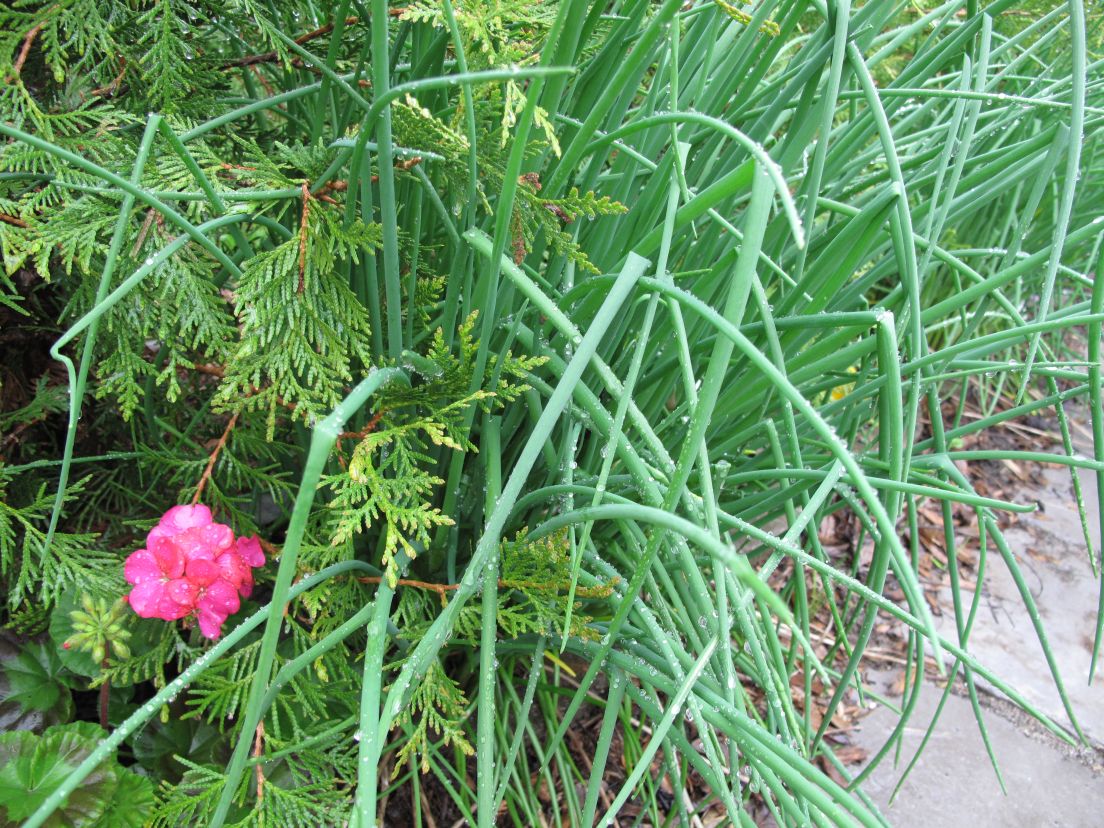
The cedars I planted last year obviously like it and are in need of a prune. I did some top-heavy pruning in early spring so decided to give them a chance to recover from that before doing the rest:

The sage also seems fine. The brown bits are last year's sage. The new growth is already well underway:

And the thyme seems to like its spot nestled under the other cedars:

Yesterday, I bought Steven Wilson's "Insurgentes" CD. He is English, and it is perfect music for this weather that can only be made by someone from that rainy and grey little island:
But I'm not saying he has Morrissey's "Everyday Like Sunday" beat in this regard:
But there's chili in the oven, so it's all tolerable.
Thursday, March 24, 2011
Japan's problems with nuclear have strengthened George Monbiot's positive opinion of it
In a Guardian column, environmental/green activist George Monbiot describes how the problems in Japan have strengthened his support for nuclear as a part of a power mix that includes renewables.
It is a balanced column that hits all the right notes.
It is a balanced column that hits all the right notes.
Wednesday, March 23, 2011
Chernobyl wasn't as bad as most of us imagined it was
Chernobyl and Three Mile Island seem to be the benchmarks for measuring how bad the current Fukushima Daiichi nuclear reactor problem is, with Chernobyl being the worst-case and Three Mile Island being a best-case in popular assessment.
But, since there have been so few nuclear accidents and the meaning of the scale is therefore vague, it's worth asking how bad Chernobyl really was. Real Clear Science attempts an explanation:
Meanwhile, how many coal mining accidents do we have every year? How many people die protecting sources of oil? How many die from issues related to the fumes produced when we burn these things? How much carbon dioxide do we produce getting agitated and talking about carbon dioxide emissions?
That's why Seth Godin's graph that I posted yesterday has some merit.
Why can't the same people who criticize the imaginary fear of terrorist threat levels organize in the same way around the limp threat of nuclear energy? These fears come from the same place -- something that you can't see and don't understand that could attack you in ways you least expect.
And the people who say that the structural safety models of these plants are flawed and that the risks of failure are unknowable would also have to accept that the threat models that predict the consequences of such a failure are also flawed and vastly over-state the danger.
But, since there have been so few nuclear accidents and the meaning of the scale is therefore vague, it's worth asking how bad Chernobyl really was. Real Clear Science attempts an explanation:
It is worth putting even the UN’s low casualty figures in perspective. As the report notes, over 1,000 onsite reactor staff and emergency workers received heavy exposure to high levels of radiation on the first day of the accident, and some 200,000 workers were exposed in recovery operations from 1986-1987. But only 50 had died of cancer 20 years later.A deficient reactor design, clear breach of operational protocol, possibly drunken operators... and this is the worst we have ever seen from nuclear.
Exposed children are more at risk from thyroid cancer, but the recovery rate – even in the Soviet Ukraine – was 99 percent. The health experts could find no evidence of increased rates of leukemia or other cancers among the affected residents.
Meanwhile, how many coal mining accidents do we have every year? How many people die protecting sources of oil? How many die from issues related to the fumes produced when we burn these things? How much carbon dioxide do we produce getting agitated and talking about carbon dioxide emissions?
That's why Seth Godin's graph that I posted yesterday has some merit.
Why can't the same people who criticize the imaginary fear of terrorist threat levels organize in the same way around the limp threat of nuclear energy? These fears come from the same place -- something that you can't see and don't understand that could attack you in ways you least expect.
And the people who say that the structural safety models of these plants are flawed and that the risks of failure are unknowable would also have to accept that the threat models that predict the consequences of such a failure are also flawed and vastly over-state the danger.
Glad for a lack of "meaningful" Canada Pension Plan reform
Although, like most people, I don't understand why we need another federal election in Canada, I am glad that the Minister of Finance didn't give in to certain demands from the NDP -- their only realistic source of saving grace in this cycle -- such as an overly-unrealistic increase in Canada Pension Plan benefits.
I'm not opposed to restructuring the Canada Pension Plan, but I am opposed to increasing payouts from the plan in a way that pays out to a person that isn't commensurate with the amount that that person paid in.
In other words, if they want to say that you have to contribute an extra X dollars to the plan every year and that, as a result, you'll receive Y more dollars in benefit when you are retired, then I am OK with that. But I'm not OK with saying that you've paid in X dollars all your life and were told you'd be getting Y dollars when you retire, but now that you're close to retirement and haven't put enough money aside, we're going to give you more than Y dollars without requiring you to make any significant additional contribution to the CPP, seeing as you don't have many working years left. The missing part of this story, of course, is that people like me would be footing the bill for it.
As I understand it, if you're an immigrant to this country who arrives in mid-life, you are allowed to participate in the pension plan to the extent that you've contributed. You wouldn't, for example, receive the same pension upon retirement as someone who had been contributing for their entire working life.
Why should it be any different for a non-immigrant?
Tuesday, March 22, 2011
Nuclear energy: not only clean, but safe, too.
No doubt inspired by Japan's recent problems with their Fukushima nuclear plant, Seth Godin presents this interesting graph and accompanying post:

This type of thing is so difficult to measure, and he is a marketer, but having a bit of a think about it should lead you to believe that it's probably at least accurate in abstract and/or proportion.
Wind turbine propellers already kill a lot of birds. I doubt they kill many people (if any at all), but if one flying wind turbine propeller decapitated someone some day as a result of an earthquake, it'd be one more death than this Japanese issue has caused so far (but note that the wind energy installation in Japan survived the earthquake without any problems).
Visual proof that grains make you fat; grains make you unhealthy
Actually, it's not. It should make you question this idea that is a part of low-carb and Paleo diet thinking (although it's not really "thinking" if you don't ask these questions, is it?).

The picture is taken from the book "Hungry Planet", which is a coffee table book about the typical family diets in countries around the world.
I don't have any problem with the idea of reducing carbohydrates in your diet, but as always the wonks go over the top in an attempt to be as pure as an Islamist suicide bomber in their belief.
Subscribe to:
Posts (Atom)